



Timmur and Jimbu: The Essential Duo Defining the Aroma and Electric Pungency of Nepal

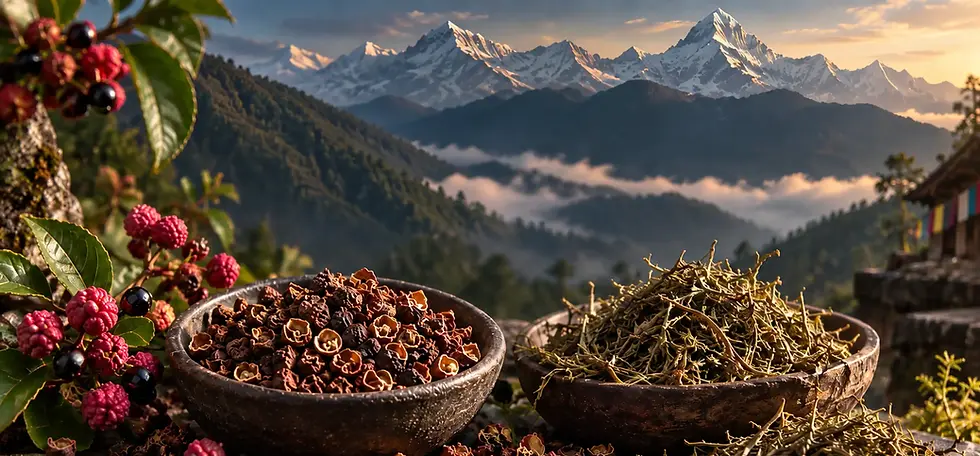
If cumin, coriander, and turmeric establish the shared foundational grammar of South Asian cooking, Timmur and Jimbu provide its unmistakable Himalayan dialect.
These two wild-foraged aromatics do not merely season food; they define the sensory architecture of Nepali gastronomy. From the trans-Himalayan trade corridors of Mustang to the bustling dining halls of Kathmandu and high-end diaspora tasting menus abroad, timmur and jimbu represent Nepal’s culinary identity at its most electric, aromatic, and untamed.
Timmur and Jimbu: The Terroir of Vertical Extremes
To understand why timmur and jimbu taste so singular, one must look directly at the harsh vertical topography from which they are harvested. Neither is a product of modern industrial farming; both are children of high-altitude stress, thin mountain air, and wild rocky terroir.

Growing between 2,500 and 4,500 meters above sea level on arid slopes, jimbu withstands intense ultraviolet radiation and freezing alpine winds. Farther down, clinging to sunny ridges between 1,000 and 2,500 meters, timmur thrives on hardy, thorny shrubs that demand manual, thorny foraging. The concentrated secondary metabolites that protect these plants from predators and environmental extremes are the very compounds responsible for their remarkable culinary potency.
Timmur: The Electric Citrus Dynamo
Often called Nepali pepper, false pepper, or Himalayan prickly ash, Timmur (Zanthoxylum armatum) belongs to the citrus family (Rutaceae) rather than the black pepper (Piperaceae) or chili (Solanaceae) lineages. The edible spice is not the small, hard black seed inside, but the rough, reddish-brown outer pericarp (husk).
The Chemistry: Hydroxy-alpha-sanshool
Unlike the chemical burn of capsaicin in chilies or the direct bite of piperine in peppercorns, timmur delivers a distinct tactile phenomenon known as paresthesia—a vibrating, electric buzzing on the tongue accompanied by mild numbness and cooling salivation.

This sensation is caused by Hydroxy-α-sanshool, an alkylamide that binds to mechanoreceptors on the tongue (specifically touch and vibration sensors rather than pain or heat receptors). The brain translates this stimulus not as burn, but as an electrical hum vibrating at roughly 50 Hz.
Simultaneously, the essential oils in timmur husks are packed with linalool, limonene, and methyl cinnamate, producing an aromatic bouquet that fuses sharp grapefruit zest, crushed pine needles, and floral mint.
Culinary Role in Nepali Gastronomy
Timmur is the soul of Nepali condimentary balance:
The Achar Catalyst: In tomato-based achars (golbheda ko achar), timmur provides a balancing citrus top-note that cuts through acidity and sweet roasted notes.
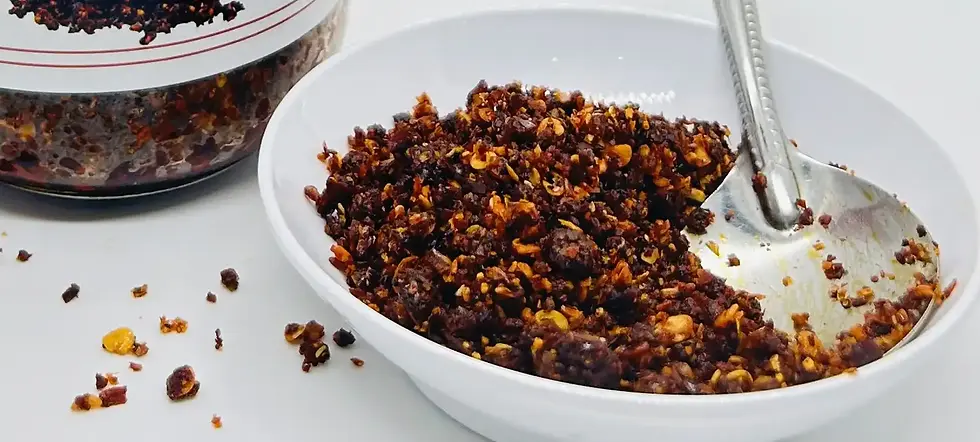
Timmur Chop: A coarse grind of toasted timmur husks, rock salt, and dried chili that serves as the premier dipping rub across the mid-hills for barbecued meats (sekuwa), cucumber snacks, and boiled mountain eggs.
Meat & Wild Game Tenderizer: When rubbing highland lamb, mutton, or wild boar, timmur's essential oils help mask gamey aromas while stimulating salivation and digestion.

Jimbu: The Fragrant Saffron of the Allium Family
If timmur provides the spark, Jimbu (Allium hypsistum and Allium przewalskianum) supplies the grounding warmth. Resembling fine, tangled strands of dried brownish-green alpine grass, jimbu is a wild onion relative endemic to central and western Himalayan pastures — especially Upper Mustang, Dolpo, Jumla, and the wider Karnali region.
The Chemistry: S-Alk(en)yl-L-cysteine Sulfoxides
Raw, dried jimbu straight from the packet has an earthy, hay-like scent. Its true identity awakens only when exposed to hot culinary lipids — ideally grass-fed cow or yak ghee.
When jimbu hits hot fat, sulfur compounds (principally allyl sulfides and allicin precursors) rapidly thermalize. The reaction releases a deeply savory, nutty bouquet that bridges sweet roasted garlic, crisped shallots, and mountain chives, with a lingering herbal tea finish. Because highland settlements historically lacked regular access to fresh onions and garlic throughout the winter freeze, dried jimbu functioned as an indispensable, shelf-stable allium concentrate.
Culinary Role in Nepali Gastronomy
The Sacred Dal Tempering (Jhaneko Dal): Jimbu is rarely cooked into a base curry; it is reserved for the final, theatrical act of jhanneko (blooming in hot fat). A small pinch is dropped into smoking ghee until it turns dark chocolate brown in seconds, then instantly tipped over black lentil dal (kalo dal) or kwati (sprouted nine-bean soup) with a dramatic hiss.

Thakali Prestige: Jimbu is the defining aromatic of authentic Thakali dining originating from the Thak Khola valley along the Kali Gandaki River. Without jimbu, a Thakali meal lacks its regional soul.
Winter Vegetable & Meat Stews: Crushed into hot mustard oil, jimbu lifts simple stews of local potatoes (aloo), tender dried radish roots (sinki), and slow-braised mountain goat curries.
Comparative Sensory Breakdown
Attribute | Timmur (Zanthoxylum armatum) | Jimbu (Allium hypsistum) |
Botanical Family | Rutaceae (Citrus family) | Amaryllidaceae (Allium/Onion family) |
Native Habitat | Mid-hills (1,000–2,500m) | High Alpine pastures (2,500–4,500m) |
Active Molecule | Hydroxy-$\alpha$-sanshool (sensory vibration) | Organosulfur compounds (allyl sulfides) |
Dominant Flavor | Electric, citrus peel, floral grapefruit, cooling | Roasted garlic, dried chives, savory-nutty hay |
Primary Technique | Dry-roasted & stone-ground into powders/pastes | Tempered in sizzling ghee/mustard oil (jhaneko) |
Signature Dishes | Golbheda ko Achar, Sekuwa, Choila marinade | Kalo Dal, Mustang Aloo, Kwati, Thakali Khana |
Cultural Wisdom & Modern Functional Health
Traditional hill medicine (Ayurvedic and Sowa-Rigpa) has leveraged both aromatics for generations:
Digestive Warmth & Antifungal Properties: Mountain diets rely heavily on dense starches, fermented roots, and pulses. The sulfur compounds in jimbu relieve flatulence and stimulate gastric secretion, easing the digestion of complex legume proteins.
Altitude Acclimatization: In Upper Mustang and Dolpo, jimbu tea simmered with ginger and black pepper is a standard remedy for altitude sickness, fatigue, and winter chills.
Oral Health & Pain Management: The localized anesthetic properties of timmur's sanshool have made it a folk treatment for toothaches for centuries (often chewed directly between molars to dull dental nerve pain). Modern pharmacognosy confirms its potent antimicrobial, antioxidant, and anti-inflammatory attributes.
The Modern Culinary Frontier
Timmur and jimbu are moving rapidly beyond regional home kitchens into the vanguard of global culinary experimentation. In contemporary kitchens from Kathmandu to London, chefs are treating these ingredients with modern gastronomy techniques:
Infusions & Emulsions: High-grade cold-pressed oils and compound dairy butters infused with toasted jimbu are transforming sauces and modern French-Himalayan pan reductions.
Charcuterie Cures: Timmur’s citrus-peppery numbing quality makes it a remarkable dry-cure rub for duck breast, wild venison, and beef tartare.
Liquid Gastronomy: Mixologists are blending timmur tinctures into craft gins, highballs, and tequila cocktails, using its tongue-buzzing profile to replace conventional citrus twists.
Safeguarding the Mountain Heritage
Because both timmur and jimbu are predominantly gathered from wild populations, their growing international popularity highlights an urgent need for sustainable harvesting. Over-extraction in Mustang’s fragile alpine meadows and unmanaged mid-hill stripping threaten wild yields.
Supporting formal community-forest cooperatives, ethical sourcing pipelines, and domestic wild-plant cultivation ensures fair income for high-altitude harvesting communities while protecting Himalayan biodiversity.
Timmur and jimbu are not interchangeable seasonings. They are botanical signatures of geography, history, and survival—two wild mountain plants that together compose the unmistakable aromatic soul of Nepal.


Comments